Kindergarten to Year 2
Understanding you can hold in your hands.
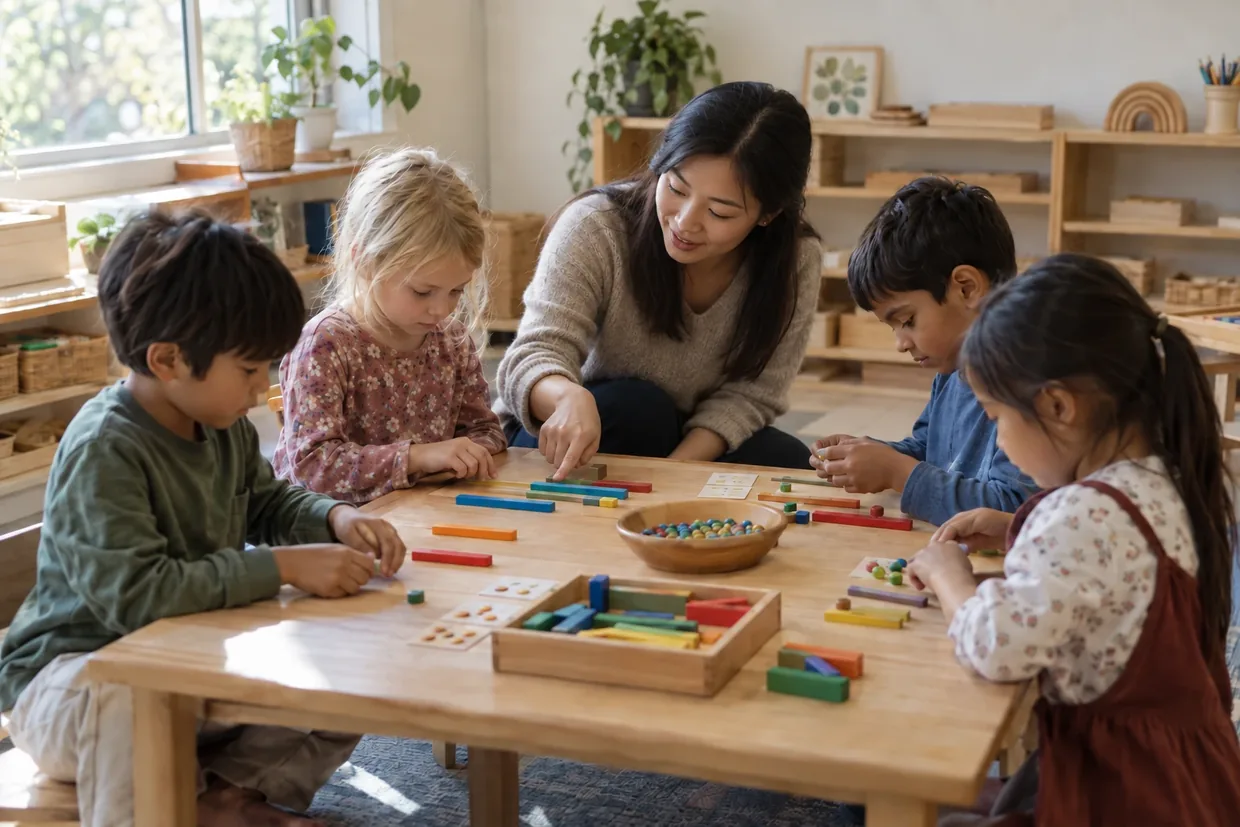
A child of five or six does not learn best from a page of sums. They learn by moving things, seeing what happens and trying it for themselves. So that is where we start — with materials they can pick up and explore. Written work follows once the idea behind it is understood.
Why these years matter
The years that decide how hard school feels later.
Nearly everything a child meets from Year 3 onwards rests on a small number of foundations built in the early years — what numbers mean, how they come apart and go back together, how letters make sounds and sounds make words. When those foundations are secure, a child has more attention left for reasoning, problem solving and harder work. When they are not, too much of that attention is still being spent on the basics.
The order we teach in
“Understand it. Then practise it. Then make it quick.”
In that order, every time. A child who has only learned a procedure can struggle when the question looks different. A child who understands the idea can rebuild the method.
Why here
What makes this different.
In the room
Ideas your child can pick up.
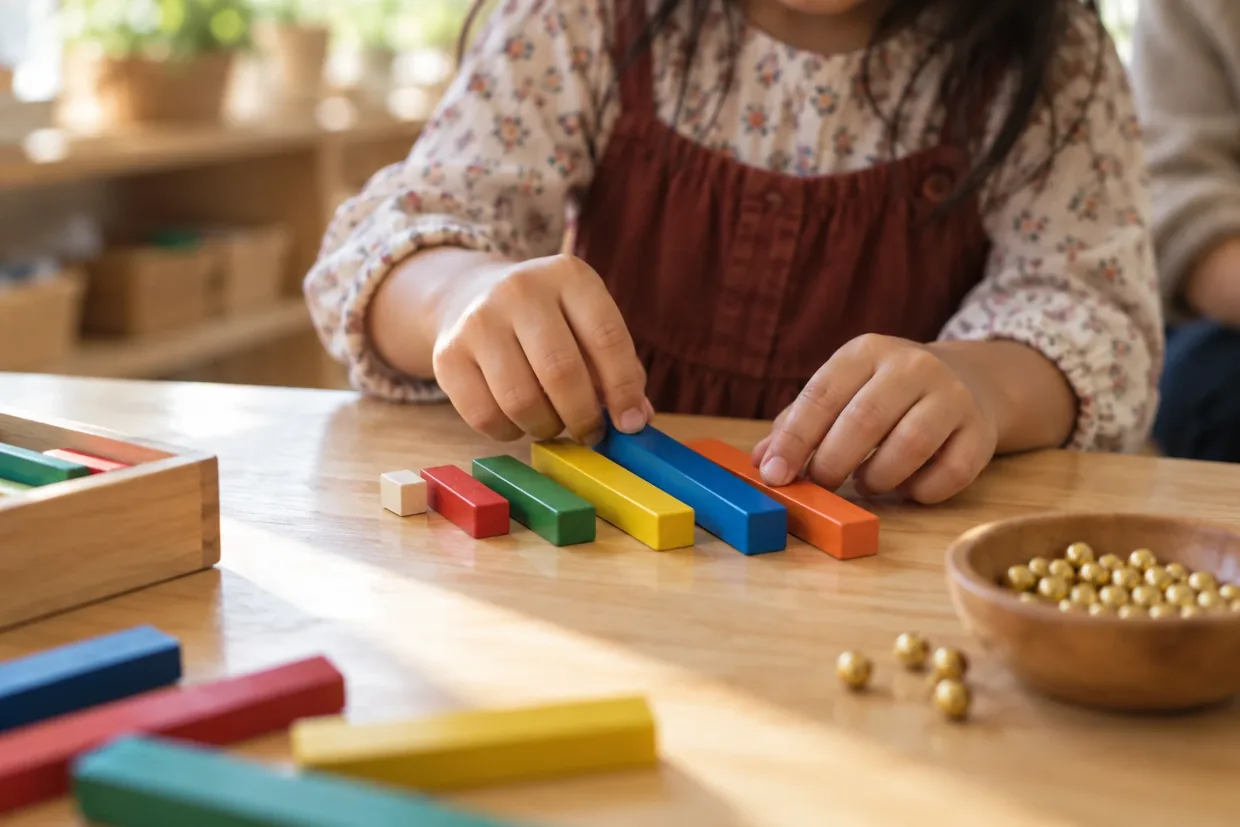
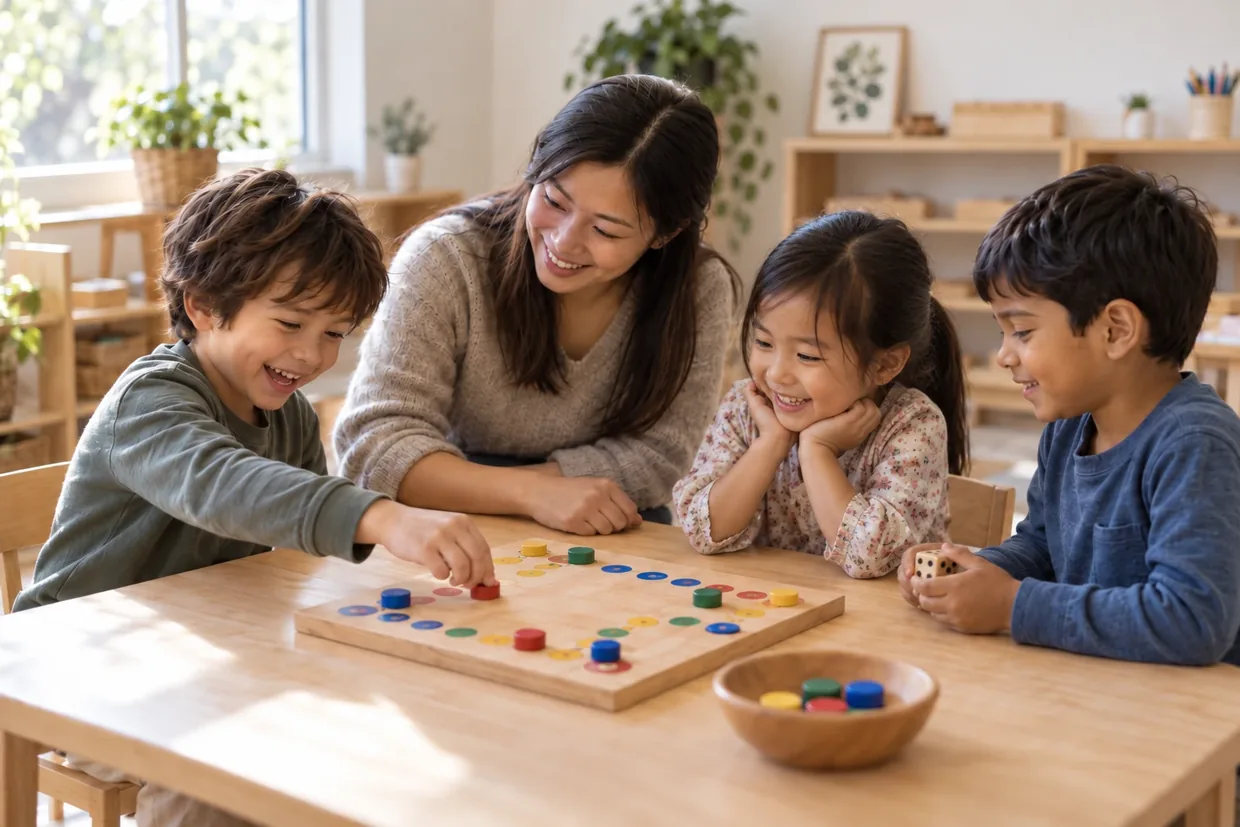
Images are illustrative.
Free · no obligation
Ask us about Maths & English Fundamentals, Kindergarten to Year 2.
Tell us your child's year and what you are hoping for. We will reply with the next available times.
- 1The right groupBy year, and by what your child can already do.
- 2What is coveredThe skills for that year, in plain language.
- 3When classes runCurrent times at our Cabramatta Centre.
Plus a $30 material fee each term, which covers the apparatus and games your child uses in class.
There is a discount when a child takes more than one of our courses.
Ask us about our referral discounts.
Straight answers
Questions parents actually ask.
My child is in Kindergarten. Is that too young for tutoring?+
It would be too young for worksheets and exam practice, which is not what this is. At this age we are building the ideas everything later sits on, using materials and games. Most children treat it as something they enjoy rather than as extra school.
What are Montessori-inspired materials?+
Objects a child can pick up and move — rods, counters, beads and cards — that make an abstract idea visible. A child sees that ten ones really is one ten instead of being told it. We use the approach; we are not a Montessori school and do not claim to be one.
Is it all games?+
No. A game is one part of a lesson and it comes last. The idea is taught with materials, practised in writing, and only then made quick with a game.
What if my child is ahead, or behind?+
Both are normal at this age and both are expected. Nobody is marked down for taking longer, and a child who is ready moves on to harder work rather than waiting for the group.
What does it cost?+
$495 for a 10-week term, two hours a week, plus a $30 material fee each term. There is a discount if your child takes more than one of our courses.